


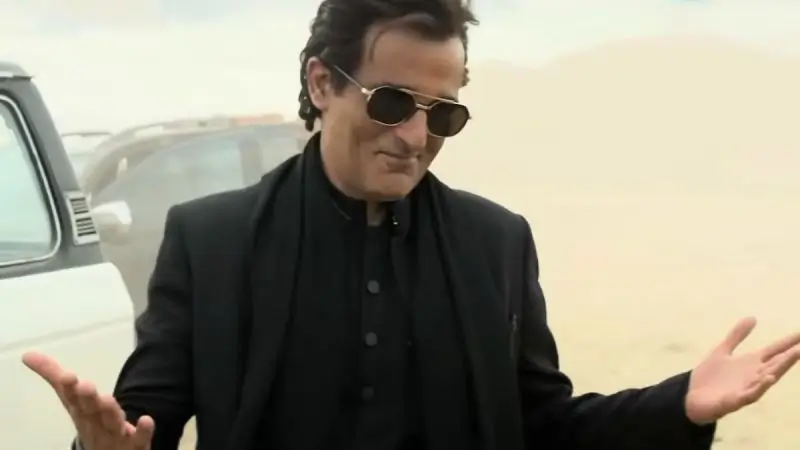
The name Rehman Dakait remains deeply connected with one of the most turbulent
The name Rehman Dakait remains deeply connected with one of the most turbulent chapters in Karachi’s history. For many people outside Lyari, the name immediately evokes gang warfare, extortion, drugs, weapons and political violence. Inside Lyari, however, the memory is more complicated. Some residents remembered him as a feared criminal; others portrayed him as a local strongman who provided assistance to poorer families and intervened in neighborhood disputes. That contradiction is one of the reasons his story continues to attract attention.
Rehman Dakait, whose real name was Abdul Rehman Baloch, rose through the criminal networks of Lyari during a period when organized crime and political competition had become increasingly intertwined. His career eventually moved beyond ordinary street crime. He became associated with powerful gangs, developed influence across parts of Karachi, and helped establish the Peoples Aman Committee in 2008. The organization was publicly presented as a force for peace in Lyari but became controversial because of allegations involving organized crime, extortion and violence.
His death in August 2009 ended the life of one of Karachi’s most controversial underworld figures, but it did not end the story. His influence continued through the networks he had created, particularly after leadership passed to his cousin Uzair Baloch. Understanding Rehman Dakait therefore requires more than repeating stories about a gangster. It requires looking at the social conditions of Lyari, the evolution of Karachi’s gang wars, the relationship between criminal power and politics, and the competing narratives surrounding his legacy.
Rehman Dakait’s Early Life and the Making of a Criminal Figure
Rehman Dakait grew up in Lyari, one of Karachi’s oldest and most historically distinctive neighborhoods. Lyari has long had a strong Baloch cultural identity and is known for its close-knit communities, football traditions, boxing culture and working-class character. At the same time, parts of the area became associated with drugs, weapons and criminal organizations, particularly as Karachi experienced wider political and security instability. Contemporary reporting placed Rehman’s childhood in this environment and described his early departure from formal education.
Accounts of his early criminal life vary in their details, and some of the most dramatic stories surrounding him should be treated carefully because they have been repeated for years without consistent independent verification. What is clearer is that Rehman became involved in drug dealing and local criminal networks while still young. His family and social connections also brought him into contact with established figures in Lyari’s underworld. Rather than appearing suddenly as a major gang leader, he developed his reputation gradually within an environment where criminal groups already competed for territory and influence.
The transformation from a neighborhood criminal into a major gang leader was closely connected to the rivalries that dominated Lyari. Several groups competed for control, and personal relationships could quickly turn into violent conflicts. Rehman became associated with the Laloo gang and eventually developed a bitter rivalry with Arshad Pappu, another important name in Lyari’s criminal history. As established leaders were arrested, killed or weakened, younger figures gained opportunities to take control.
From Street Crime to Organized Power
By the late 1990s and early 2000s, Rehman was no longer simply associated with petty crime. Authorities and contemporary media reports linked his network to serious offenses including murder, kidnapping for ransom, extortion, drug trafficking and weapons-related activities. He was also reported to have escaped custody more than once, contributing to the image of an increasingly powerful and difficult-to-control criminal figure.
The significance of this period lies in how criminal organizations evolve. A gang becomes much more powerful when it moves beyond individual crimes and develops systems for collecting money, recruiting people, controlling territory and intimidating rivals. Rehman increasingly operated within that model. His influence expanded outside Lyari into other parts of Karachi, including areas such as Malir and Korangi, according to historical accounts of the period.
That expansion also meant that his conflict with rival groups became more dangerous. Violence was no longer limited to isolated personal disputes. Gang warfare could affect entire communities, businesses and families, creating an atmosphere in which ordinary residents were often caught between competing forces.
The Lyari Gang War and Rehman Dakait’s Rise to Prominence
To understand Rehman Dakait, it is essential to understand the Lyari gang war. The conflict was not simply a conventional battle between two groups. It involved shifting alliances, family relationships, criminal businesses, territorial ambitions and the wider political environment of Karachi. Different gang leaders competed over lucrative illegal activities, while residents faced intimidation and violence.
Rehman’s major rival became Arshad Pappu. Their rivalry developed from the fragmentation of older criminal networks and eventually became one of the defining conflicts of Lyari’s violent era. As gangs divided and reorganized, the distinction between personal revenge and organized territorial competition became increasingly difficult to separate. The result was a cycle in which killings could trigger retaliation, retaliation could produce another killing, and entire neighborhoods could become associated with particular factions.
For ordinary residents, the consequences were severe. Businesses could face demands for protection money. Families could become vulnerable because of their association with one side or another. Young men could be drawn into criminal networks because gangs offered money, protection, status or a sense of belonging that formal institutions were sometimes unable to provide.
This helps explain why some residents later remembered gang leaders in contradictory ways. A criminal organization could simultaneously create fear and provide limited forms of informal assistance. A gang leader might financially help a family while maintaining a system based on coercion. Those two realities are not mutually exclusive.
The Image of a Local Strongman
Rehman eventually cultivated an image that went beyond that of an ordinary gangster. Reports and later accounts described charitable activities and assistance to people in Lyari. Some residents remembered him as someone who helped poor families, supported local initiatives or intervened in disputes. Dawn’s reporting years after his death noted that he continued to be remembered by some people in Lyari as a charismatic figure associated with compassion and local protection.
Yet this image should not erase the criminal allegations surrounding him. Social assistance does not cancel allegations of murder, extortion, kidnapping or drug trafficking. In communities affected by weak institutions, powerful individuals can gain popularity precisely because they possess resources and coercive authority. That popularity can coexist with fear.
The fascination surrounding Rehman therefore comes partly from this contradiction. He was simultaneously portrayed as a protector and accused as a predator. The difference often depended on where someone stood in relation to his organization. A family receiving help could remember him positively; a business owner pressured for money could have an entirely different memory.
Peoples Aman Committee and the Intersection of Crime and Politics
One of the most important developments in Rehman Dakait’s career came in 2008, when he helped establish the Peoples Aman Committee in Lyari. The name itself suggested a peace-oriented organization, and its supporters argued that the committee could help bring stability to a neighborhood devastated by gang conflict. Rehman also increasingly presented himself as “Sardar Abdul Rehman Baloch,” a title that reflected his effort to acquire greater social and political legitimacy.
The organization soon became associated with the Pakistan Peoples Party and with the wider political struggle surrounding Lyari. However, the exact nature of political relationships has remained contested. Reporting and historical accounts have described links between the committee and PPP figures, while the political party and its representatives have at various points rejected or disputed allegations of direct institutional responsibility for criminal activities.
This is where Rehman’s story becomes more complicated than a conventional gangster biography. Political parties sometimes operate in environments where local influence matters as much as formal government authority. In Lyari, a neighborhood with strong political loyalties, a person capable of mobilizing people could become politically significant even when that person had a criminal background.
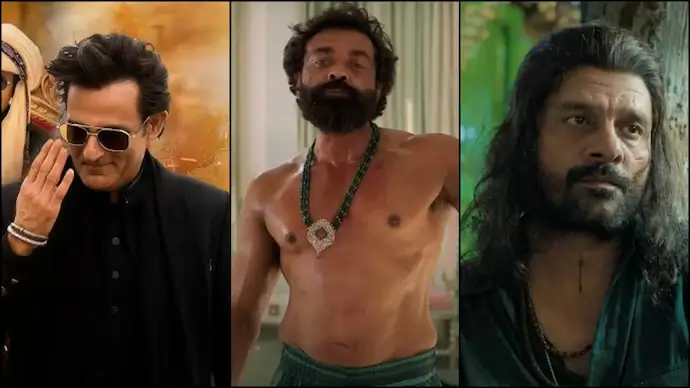
The Peoples Aman Committee rehman dakait therefore occupied an unusual space. It could present itself as a community organization while being associated with a powerful criminal network. Its supporters emphasized peace, local defense and community interests. Its critics pointed to extortion, violence and territorial control. Both perspectives became part of the historical debate surrounding the organization.
Politics, Protection and Power
The relationship between criminal groups and politics is rarely as simple as a single agreement between politicians and gangsters. It often involves informal networks, local intermediaries, personal relationships and shifting interests. Rehman’s political rise demonstrated how a feared criminal could attempt to transform coercive power into social legitimacy.
His reported role in the aftermath of the 2007 Karsaz attack on Benazir Bhutto’s procession further contributed to his public image among PPP supporters. The Herald later described how the incident helped transform his image in some political circles from gangster to political activist and protector.
But political association could not permanently erase his criminal reputation. As violence and allegations surrounding his network continued, the relationship between political legitimacy and criminal power became increasingly unstable. Eventually, Rehman again became a wanted figure, setting the stage for the final chapter of his life.
Rehman Dakait’s Death and the Controversy Around the Police Encounter
Rehman Dakait’s life ended on 9 August 2009, when he was killed in a police encounter in Karachi’s Steel Town area. Contemporary reporting stated that police intercepted Rehman and several associates and that a shootout followed. Rehman and the others were critically wounded and died while being taken to hospital.
The operation was associated with police officer Chaudhry Aslam, a prominent figure in Karachi’s fight against organized crime. The official version presented the deaths as the result of an armed encounter. However, questions were raised almost immediately about whether the encounter was genuine or staged. Those allegations have remained an important part of Rehman Dakait’s historical legacy.
The controversy illustrates one of the recurring problems in the history of Karachi’s violent crime: the difficulty of establishing public confidence in encounters involving notorious suspects. When a wanted criminal dies in a confrontation with police, official accounts may describe it as an armed exchange, while critics may question whether due process was followed.
In Rehman’s case, the debate became particularly intense because he had supporters in Lyari who did not view him solely as a criminal. His death was followed by a tense atmosphere in the neighborhood, and thousands reportedly attended his funeral.
Why His Death Did Not End His Influence
The death of a gang leader does not necessarily destroy the organization surrounding him. Criminal networks can survive because they are built around money, territory, personal loyalties and established relationships. After Rehman’s death, leadership of the Peoples Aman Committee and his wider network passed to his cousin Uzair Baloch, who subsequently became an even more prominent figure in the later phase of Lyari’s violence.
This succession demonstrates why focusing exclusively on Rehman’s death can obscure the larger story. The structures he helped build continued to influence Lyari after 2009. Political relationships, gang rivalries and security operations continued to shape the area for years.
Rehman’s death was therefore an ending for one individual but not an immediate ending for the political and criminal ecosystem in which he had operated.
Rehman Dakait’s Legacy: Gangster, Benefactor or Symbol of a Broken System?
Few aspects of Rehman Dakait’s story are as controversial as his legacy. Some accounts portray him primarily as a ruthless gangster responsible for violence and criminal activity. Others emphasize his popularity among segments of Lyari’s population and the assistance he reportedly provided to poorer residents. The temptation is to choose one version and reject the other, but the historical reality is more complicated.
A person can provide genuine assistance to a community while simultaneously participating in serious criminal activity. In areas where government institutions are perceived as distant or ineffective, residents may depend on powerful informal actors for help with disputes, financial emergencies or security. That dependence can create loyalty without necessarily meaning that residents approve of every action committed by the powerful individual.
Dawn’s later reporting on Lyari described how Rehman’s memory remained embedded in the neighborhood, with physical locations and community spaces continuing to carry associations with his family and name.
That enduring memory is significant. It suggests that Rehman was not simply an outsider who entered Lyari and disappeared. He emerged from the neighborhood’s own social environment and became part of its collective history, however troubling that history may be.
The Bigger Lesson From Rehman Dakait’s Story
The most useful way to examine Rehman Dakait is not to romanticize him or reduce him to a one-dimensional villain. His story reveals how criminal power can grow where poverty, political competition, weak law enforcement, social networks and territorial disputes overlap.
It also demonstrates how easily violence can acquire a political dimension. Once a criminal leader gains enough influence, political actors may see value in his ability to mobilize people, while the criminal leader may see politics as a route toward legitimacy and protection. That relationship can be mutually beneficial for a time, but it can also collapse dramatically when interests change.
Rehman Dakait’s history also reminds us that the reputation of a gangster is often created by competing narratives. Police records, newspaper reports, political statements, neighborhood memories and later popular culture can tell very different versions of the same life. A responsible account should distinguish between established facts, allegations and stories that have become part of local folklore.
Conclusion
Rehman Dakait remains one of the most recognizable figures associated with Lyari’s turbulent criminal history. His journey from a young man involved in local crime to a powerful gang leader and political actor reflected the complicated environment in which Karachi’s gang wars developed. His association with the Peoples Aman Committee marked an especially important stage, when criminal authority and political influence became increasingly intertwined.
His death in 2009 ended his personal rise but did not immediately eliminate the networks and conflicts surrounding him. His successor, Uzair Baloch, continued to play a major role in Lyari’s later history, demonstrating how deeply established the underlying structures had become.
Perhaps the most important lesson from Rehman Dakait’s story is that communities do not produce powerful criminal figures in isolation. Such figures emerge from particular social, political and economic conditions. Understanding those conditions is more valuable than simply turning a gangster into a legend.
Rehman Dakait’s legacy therefore remains divided: feared by many, defended by some, politically controversial and permanently connected to one of Karachi’s most difficult periods. His story belongs not only to the history of crime but also to the broader history of Lyari and the struggle between community identity, political power, organized violence and the rule of law.
FAQS About Rehman Dakait
1. Who was Rehman Dakait?
Rehman Dakait, whose real name was Abdul Rehman Baloch, was a prominent gangster from Lyari, Karachi. He became associated with organized crime, gang warfare and later the Peoples Aman Committee.
2. Where was Rehman Dakait from?
He was from Lyari, Karachi, an area historically known for its strong Baloch identity, working-class communities and football and boxing culture. Lyari also experienced serious gang violence during the period in which Rehman rose to prominence.
3. What was Rehman Dakait known for?
He was primarily known for his role in Lyari’s gang wars, his criminal network and his involvement in establishing the Peoples Aman Committee. Authorities and media reports associated his network with crimes including extortion, murder, kidnapping and drug trafficking.
4. What was the Peoples Aman Committee?
The Peoples Aman Committee was established in Lyari in 2008 with Rehman Dakait as its leading figure. It presented itself as an organization concerned with peace and local interests but became controversial because of allegations connecting it to organized crime and violence.
5. Was Rehman Dakait connected to the Pakistan Peoples Party?
The Peoples Aman Committee became closely associated with the PPP and Lyari’s political environment. However, claims concerning the precise nature and extent of institutional involvement have been disputed, so it is more accurate to describe the relationship as politically controversial rather than present every allegation as established fact.
6. Who was Rehman Dakait’s main rival?
Arshad Pappu became one of Rehman Dakait’s most prominent rivals. Their conflict was part of the broader gang warfare that devastated Lyari and contributed to years of violence in the area.
7. When did Rehman Dakait die?
Rehman Dakait died on 9 August 2009 in Karachi following a police encounter in the Steel Town area. Contemporary accounts reported that he and several associates were critically wounded during the confrontation and died while being transported to hospital.
8. Was Rehman Dakait killed in a genuine police encounter?
Police officially described his death as the result of an armed encounter. However, allegations that the encounter was staged or extrajudicial emerged around the time of his death and remained part of the controversy surrounding the case. The competing accounts should be distinguished rather than presented as equally established facts.
9. Who took over after Rehman Dakait?
After Rehman Dakait’s death, his cousin Uzair Baloch became the leading figure associated with the Peoples Aman Committee and the network surrounding it. Uzair later became a major figure in the continuing political and criminal history of Lyari.
10. Why is Rehman Dakait still remembered in Lyari?
His memory remains controversial because different people remember different aspects of his life. Some associate him with violence, extortion and gang warfare, while others remember assistance he reportedly provided to poor residents and his role as a local strongman. His continued presence in local memory reflects the complicated relationship between criminal power, community identity and political influence in Lyari.
